
|
Podcast merch!
Listen and subscribe: RSS FEED ITUNES Soundcloud Stitcher Spotify If the episodes below don't load, turn off your ad blocker. |
|
|
Dr. Patrick Smith and Kolie sit down to discuss the athletic and coaching implications of Karl Friston's free energy principle of the brain, the right approach to bridge the gap between expectations and observable reality in training, and the right amount of sensitivity to this feedback. This dovetails with the appeal of quick fixes, miracle intervals, and silver bullet training principles. We also discuss what practical solutions are, setting yourself up for success, and your listener questions.
Show Notes Patrick's website and contact Karl Friston's Free Energy Principle of The Brain Breakdown on the free energy principle The importance of stupidity in scientific research
0 Comments
This episode investigates the scientific relationship between size and power (allometry), both vo2max and maximal strength and power, and what it can teach us about sound training methods. How do w/kg and w/CdA scale? Why can't gaining muscle add aerobic power? Why can FTP seem to drop when dieting? Why do we rebound from crash diets? Why do most Tour de France winners seem to fit a certain size and weight? We answer all these questions and more, plus your listener questions.
Show Notes Allometry paper 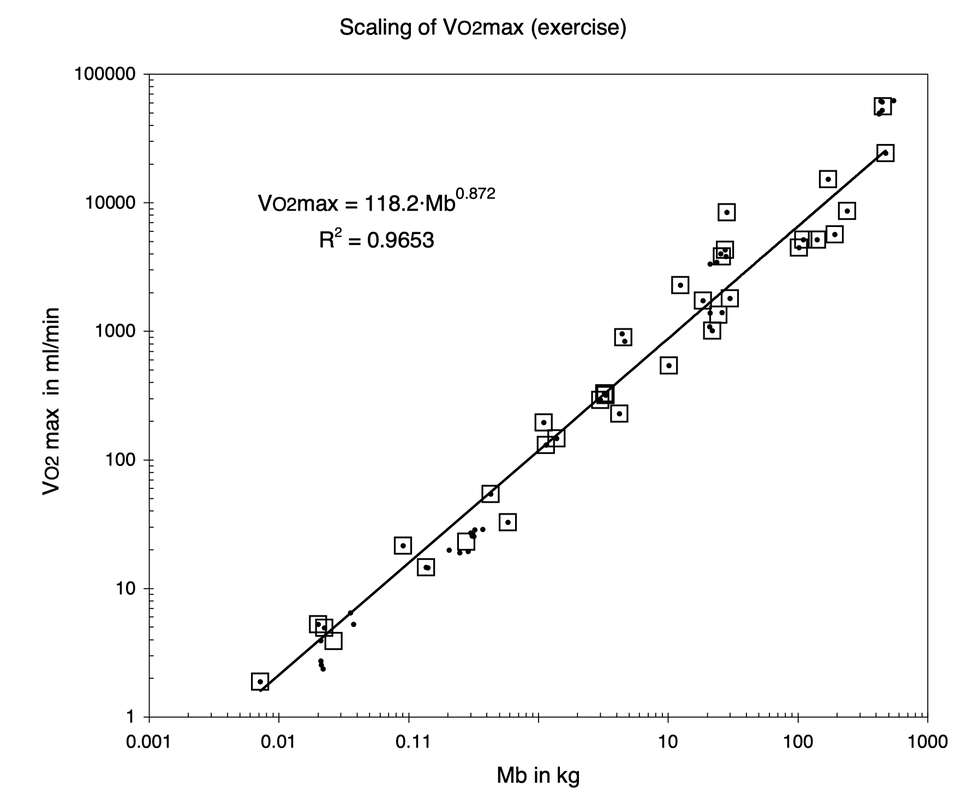
Allometric scaling of absolute vo2max in mammals (without separation of athletic and non-athletic species).
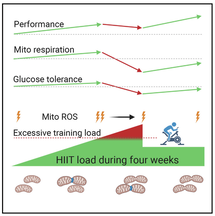
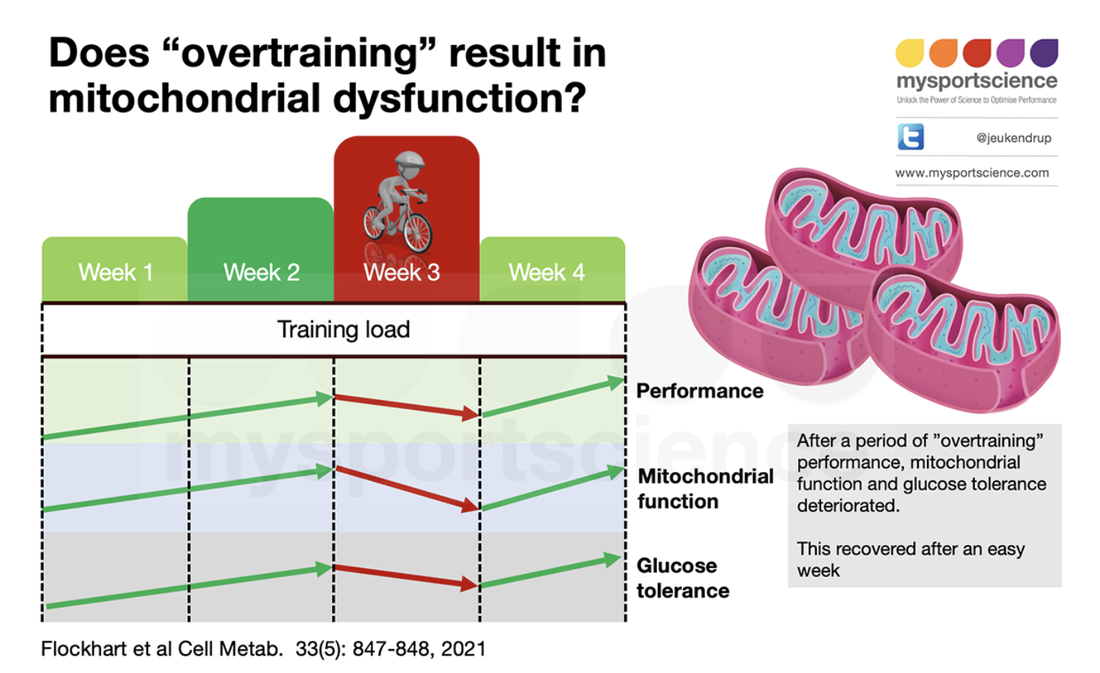
Does overtraining cause mitochondria to dysfunction? We look at data in the Flockhart study on excessive training and compare them to the headlines, a similar overtraining study using proteomics, and a published response to Flockhart. We break down mitochondrial function, what various measurement actually tell us, why your mitochondria are probably just fine, and why these studies raise more questions about mitochondria's role in overtraining (if any) than they answer. Finally, we answer your listener questions on the Flockhart study, mitochondrial function, and overtraining.
Show Notes Flockhart overtraining study (open text) Granata overtraining study (open text) Hawley and Bishop response Jeukendrup summary of Flockhart study
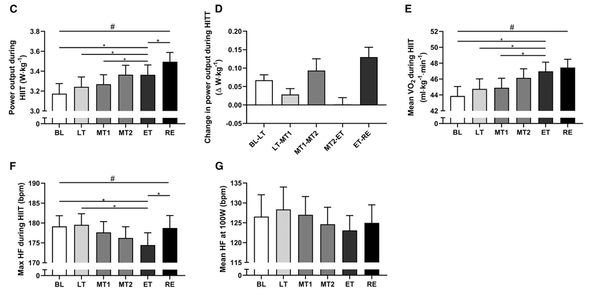
Flockhart main performance data
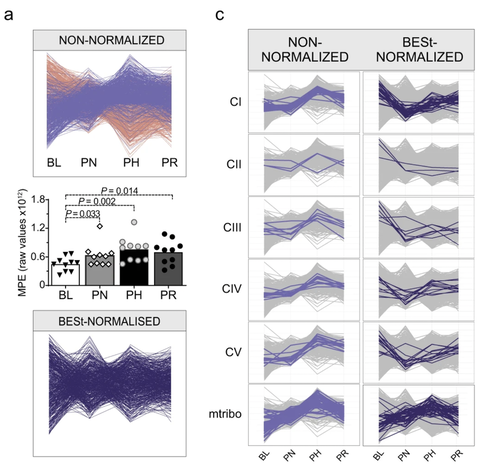
Granata normalization of mitochondrial proteins (with electron transport chain components, ATP synthase, and mitochondrial ribosomes)
Kolie sits down with Cory Lockwood to discuss breaking the U.S. 40km ITT record, going under 45 minutes. Cory also talks about what's different working with Kolie from previous training he's done, along with observations about rest, FTP and VO2max training, training during race season, and reflections on what it means to be both an athlete and coach.
Show Notes USA Cycling National Records
This episode answers the question: is there something unique about endurance riding that is unavailable at other intensities? After discussing "zone 2" definitions, we look at adaptations and dose relative to other training intensities, fatigue, and volume. We look at the relative necessity of endurance riding in both very low and high volume training, and answer listener questions, including if there's a lower limit for endurance pace.
Master coach and WKO5 product leader Tim Cusick joins the podcast to get his brain thoroughly picked. Training topics include the biggest differences between average cyclists and the top pros, the usual periodization schemes vs Olympic cycles, the evolutionary process of a training plan, expertise vs mastery, and of course, resting.
Data topics include whether we'll ever get the AI coach in our lifetimes and what it might do when it's here, what WKO5 is and isn't, the secrets of the PD model and mFTP, the PMC, TSS, training impact score, and the value of lab testing. Tim also answers listener questions about how he prescribes training targets, low cadence training, youth development, and advice to get the most out of a coaching relationship. Show Notes tim@joinbasecamp.com Tim Cusick's CV
To celebrate 400,000 podcast listens, we answer your questions submitted in the Empirical Cycling Instagram stories. We discuss high and low volume training and progressive overload, 3 things every cyclist should do, low CHO training, FRC for mountain bikers, supplements for athletes, our best non-empirical cycling advice, and much more. The full questions list is available on the website.
Show Notes If everything boils down to volume then why do I want to end endurance rides higher than I started with? Vs going harder than I should for the time. And finishing weak at the end. Time on the bike would be the same because the route gets decided before walking out the door. E.g. intervals or group ride then endurance riding. Listened to the Rich Roll Norwegian tri pod? Thoughts? Are you their coach with the pen name? How true is it that fasted training “teaches your body to use more fats”? What’s the connection between a long anaerobic effort (>60”) and the use of oxygen in vo2max Track sprint: any value in double days (gym morning, track evening) for general adaptation? Generally not? 1 change that mr lockwood made to get better No question, just looking forward to the 420.60k ama Block or linear periodization pros and cons? It’s ok to split z2 work time in two when short on time… same with tempo/sst/threshold? <5h a week to ride, what to do More mitochondria and larger surface area are two different adaptations? Favorite watch? Is it a seiko? When you talk about 30h/wk cycling, can that be replaced by other sports? How do pros progressively overload? They are already at max volume? Would you rather: sprints 3x/week before a crit or set next ftp block with ramp test? Name 3 things that every cyclist should do Congrats! What would you do differently if you had to start the podcast over? After 400k listens you have a good idea of questions asked. Your best training advice to us? How much more focus would you give FRC work for a mountain biker vs roadie? Yes or no: American road cycling is dead Agree/disagree: if you’re not a competitive power lifter, stay away from straight bar deadlifts What is meant by “hitting my openers” in cycling? Who you got beef with in the coaching world? & research world? Hot take: surges only suck when you’re not a sprinty boy or gal? What something you are constantly questioning about your own training methods What’s your sports science/coaching holy grail you wish you could figure out before you die? What can negative decoupling during an endurance ride mean? Time for you and Kyle to bring on athletic greens. It’s not selling out, topics can get more geeky Inigo and Rx of intervals after z2 being optimal. Fact, fiction, or just optimal for race specificity After A event how many weeks off the bike before getting back into things. Motivation is high! Thoughts on low CHO aerobic training accentuating pgc1a translocation and activation? BFR for aerobic adaptations? some research coming out with increased vo2max Your top 5 contributors to exercise phys research? Can be applied, mechanistic, etc No question but thanks for shaming me into resting and riding easy What is your best non-empirical cycling advice? Is there any point to protein supplements for endurance athletes with balanced diets? Bonus Track: Kyle explains Poynting vectors!
This episode breaks down the origins of endurance performance and how cells control substrate oxidation. We review a paper looking at the difference in adaptive aerobic signals when participants used significantly different amounts of fat and carbs at the same intensity. We then look at the role of mitochondria in cellular energetics, the pivotal role they play in aerobic endurance adaptations, and finally what the training implications are. Plus we answer your listener questions submitted to Kolie's Instagram.
Show Notes Carbohydrate improves exercise capacity but does not affect subcellular lipid droplet morphology, AMPK and p53 signalling in human skeletal muscle Regulation of skeletal muscle mitochondrial fatty acid metabolism in lean and obese individuals Metabolic adaptations to short-term training are expressed early in submaximal exercise Biochemical adaptations in muscle
Are you a CTL junkie? Terrified of letting it drop? Listen in. This episode takes a critical but realistic look at TSS and the metrics it's built on like CTL, ATL, and TSB. We discuss normalized power, what kind of fitness CTL can actually reflect, and answer listener questions.
Andy Coggan joins the podcast again to discuss everything we didn't get to in the previous episode. We get back stories behind the adaptations by training zones chart and the category and w/kg chart. We also go in depth with nitrate supplementation, vo2max training. if burning fat makes you burn more fat, if signaling studies translate to performance, and the nature of adaptation itself. There are plenty of pithy proverbs along the way.
|
Archives
April 2024
Categories
All
|
 RSS Feed